
Low-maintenance landscaping in Asheville isn't about picking a few tough plants and hoping for the best. It's about designing the whole yard (grading, soil, plant choices, and mulch) so it mostly runs itself once it's established. We've been building these landscapes across Western North Carolina since 1997, and the ones that still look good a decade later all share the same handful of decisions made early.
Here's the honest version of what "low-maintenance" takes, and where people usually go wrong.
Start with native plants that already belong here
The single biggest lever is plant selection. A plant that evolved in the Southern Appalachians doesn't need you to baby it. It's built for our clay, our summer humidity, and our freeze-thaw winters. An exotic that wants sandy, alkaline soil will fight you forever.
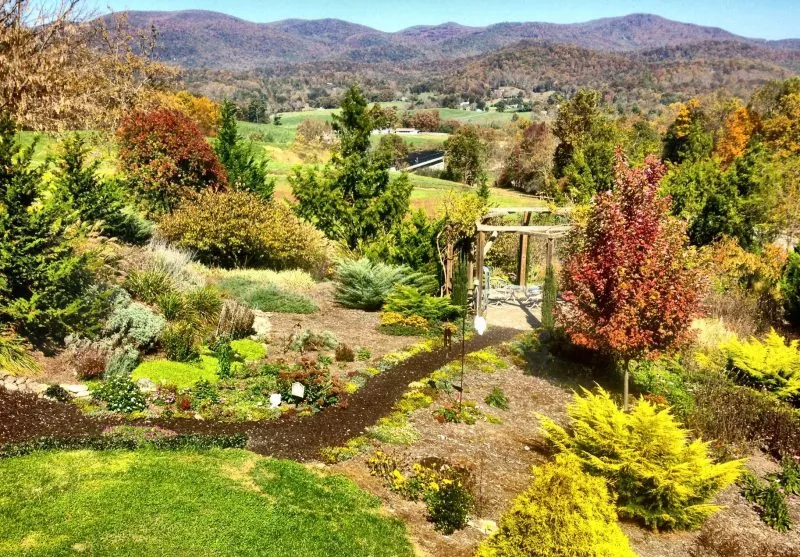
The workhorses we come back to again and again: oakleaf hydrangea, mountain laurel, inkberry holly, little bluestem, and switchgrass for structure and movement. For color that returns on its own, coneflower, black-eyed Susan, and native asters. Along shade edges under existing hardwoods, Christmas fern and foamflower fill in and stay green with almost no input. None of these need a sprinkler system babysitting them through July.
One caveat worth saying out loud: "native" doesn't automatically mean "no work." A native planted in the wrong spot (a sun lover in deep shade, a dry-slope plant in a wet swale) still struggles. Right plant, right place beats a plant tag every time.
Fix the grading and drainage before you plant anything
This is the step people skip, and it's the one that quietly wrecks low-maintenance yards. If water sheets across a bed every time it rains, you'll spend years fighting erosion, root rot, and mulch that washes into the driveway. On a mountain lot, water is always the deciding factor.
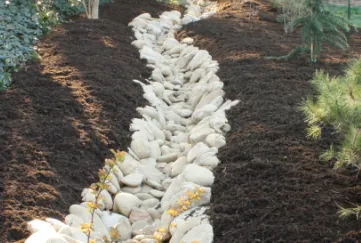
We grade so water moves where we want it, then handle the rest with dry creek beds and buried drains that double as design features rather than eyesores. Get the water right first and the plants stop dying for reasons that look mysterious but aren't. If your yard has a chronic wet corner or a slope that keeps washing out, that's a drainage problem to solve before planting, not after.
Mulch and bed edges do more work than people think
A good 2–3 inch layer of hardwood mulch suppresses weeds, holds moisture through dry spells, and slowly feeds the soil as it breaks down. It's the cheapest maintenance reducer there is. We re-mulch beds roughly once a year and keep it pulled back a few inches from trunks and stems so nothing rots.
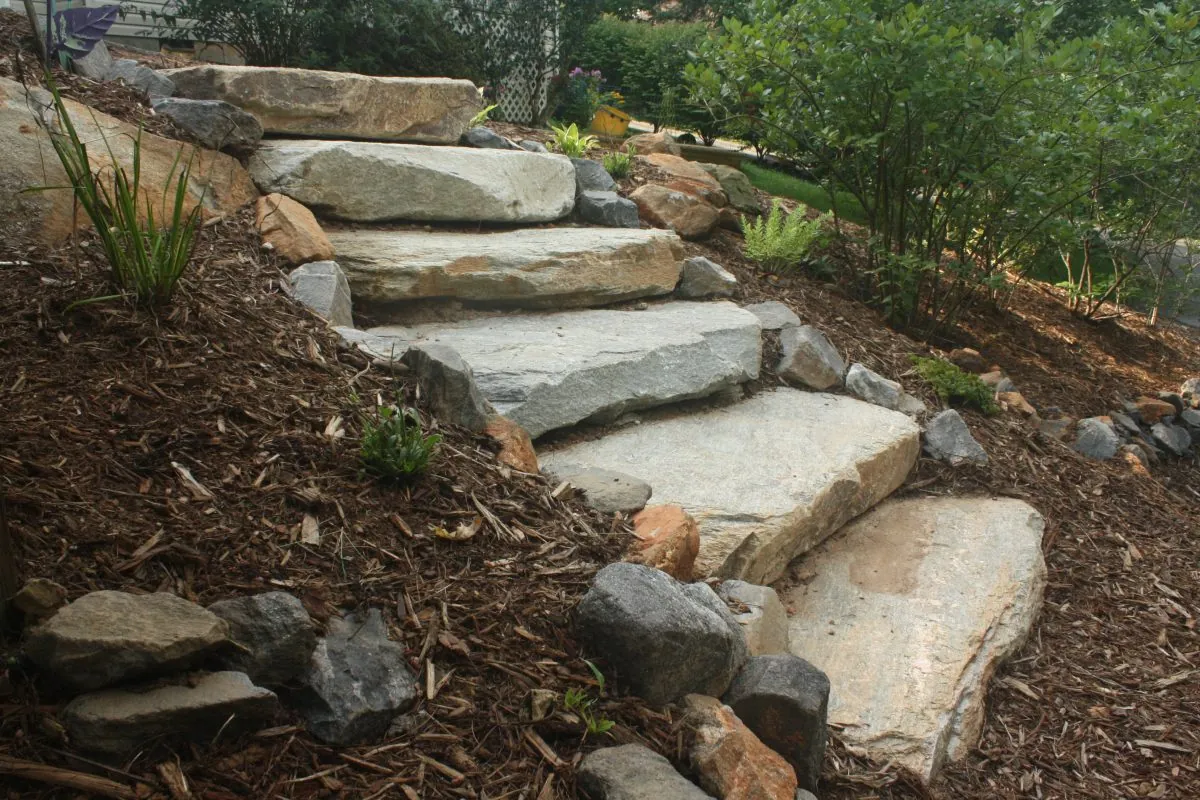
Clean, defined bed edges matter too. A crisp spade-cut or stone edge keeps grass from creeping into beds, which is where a shocking amount of "yard work" actually comes from. Fewer, larger beds with generous edges are far less fussy than a lawn dotted with little islands.
Shrink the lawn you don't use
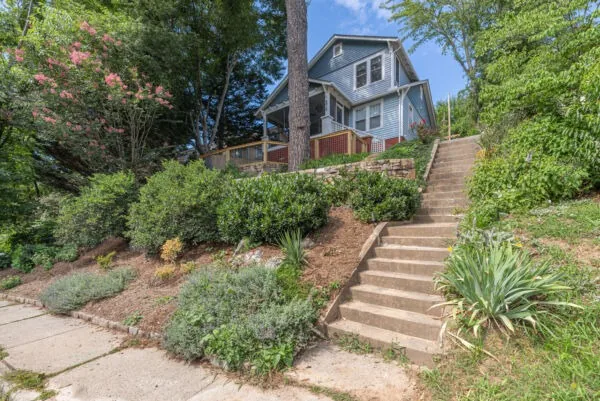
Turf is the highest-maintenance surface in any yard: mowing, watering, feeding, weeding, all season. That doesn't mean rip it all out. It means keep lawn where you actually use it (a play area, a spot for the dog) and convert the rest to planted beds, groundcover, or hardscaping. Most of the "I want less yard work" jobs we do come down to reclaiming lawn nobody was enjoying anyway.
What low-maintenance really costs
Here's the trade people don't always expect: a truly low-maintenance landscape usually costs more to install and less to keep up. You're paying up front for proper grading, soil prep, and mature-enough plants placed correctly, so you're not paying every weekend for years afterward. If a bid seems cheap, ask what happens to the water and whether the soil's being amended. That's usually where the corners get cut.
Every property is different, and the mountains make each lot its own puzzle. If you want a yard that looks intentional and mostly takes care of itself, that's the core of what we've done here for more than 25 years. Take a look at our recent transformations to see how it comes together, or tell us about your property.
Frequently asked questions
What are the best low-maintenance plants for Asheville, NC?
Native Appalachian species handle our clay soil and freeze-thaw winters with the least fuss. Reliable choices include oakleaf hydrangea, mountain laurel, inkberry holly, little bluestem, switchgrass, coneflower, and native asters. In shade under existing hardwoods, Christmas fern and foamflower stay green with almost no input.
Does low-maintenance landscaping cost more?
Usually more to install, less to maintain. You pay up front for proper grading, soil prep, and correct plant placement so the landscape mostly runs itself. Cheaper installs often skip drainage and soil work, which is what creates ongoing maintenance later.
How do I reduce yard work without removing all my grass?
Keep lawn only where you actually use it and convert the rest to planted beds, groundcover, or hardscape. Turf is the highest-maintenance surface in a yard, so shrinking it, not eliminating it, cuts the most work.
Thinking about a project like this?
We've been designing and building landscapes across Asheville and Western North Carolina since 1997. Tell us about your property and we'll walk it with you.
Schedule a consultation or call 828-624-5136