
Yard drainage solutions in Asheville have to account for three things at once: steep slopes, clay soil that doesn't absorb water quickly, and the kind of hard mountain downpours that can drop inches in an afternoon. Get any one of them wrong and you end up with a soggy yard, a wet basement, or a slope that keeps sliding. After Hurricane Helene, a lot of Western North Carolina homeowners learned that lesson the hard way.
Drainage is one of the most common reasons people call us, and it's rarely as simple as "add a drain." Here's how we actually think through it.
Start by finding where the water comes from
Before any pipe goes in the ground, we figure out where water is entering the property and where it wants to go. Roof runoff, uphill neighbors, a driveway that funnels water toward the house, a low spot with nowhere to drain. Each one needs a different fix. Installing a drain in the wrong place just moves the puddle a few feet.
On mountain lots, water almost always travels more than people expect. A wet spot near the house is often fed by ground fifty feet uphill. Tracing that path is the part that separates a fix that lasts from one that fails the next big storm.
French drains for water moving through the soil
A French drain, a gravel-filled trench with a perforated pipe, is the right tool when water is saturating an area from below or moving underground down a slope. It intercepts that water and carries it somewhere safe. We use them along foundations, at the base of slopes, and anywhere the ground stays spongy long after the rain stops.
The details matter more than the concept. Proper slope on the pipe, the right gravel, and filter fabric that keeps clay from clogging the system are what make a French drain still work in ten years instead of silting up in two.
Dry creek beds for surface runoff (and they look good)
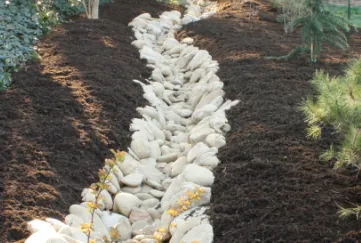
When water runs across the surface, sheeting down a slope or pouring off a hard rain, a dry creek bed channels it along a planned path lined with river rock and boulders. It handles real volume, resists erosion, and honestly looks like it belongs there. On one recent mountain new-build we turned a necessary drainage line into a dry river-rock feature that reads as landscaping, not plumbing. That's the goal: solve the problem and improve the yard at the same time.
Regrading and swales: fixing the shape of the land
Sometimes the cleanest solution is changing the grade itself. A gentle swale, a shallow planted channel, can move a surprising amount of water without any pipe at all. Regrading so the ground slopes away from the house is often the first thing we do, because no drain fixes water that's being aimed at your foundation by the lay of the land.
Erosion control on steep slopes
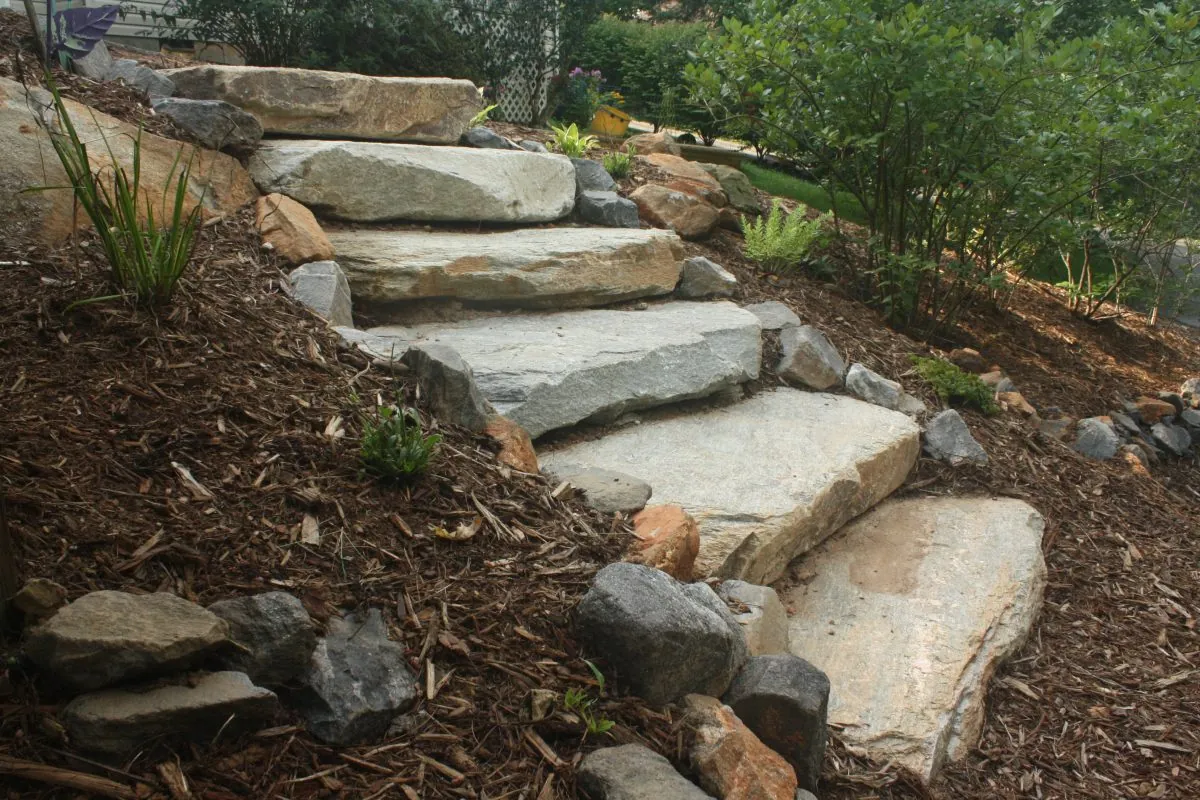
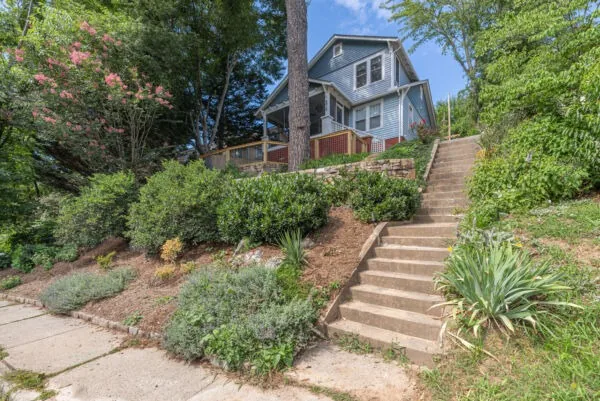
Steep WNC slopes lose soil every time it rains hard unless something holds them. Deep-rooted native plantings are the long-term answer. They knit the soil together the way turf never can. For steeper or actively eroding slopes, we combine plantings with terracing, boulder placement, or retaining walls to break the slope into stable steps. Water-loving plants along drainage paths also pull double duty, absorbing runoff while stabilizing the ground.
The mistake that causes most drainage failures
Treating the symptom instead of the source. Adding a surface drain to a chronic wet spot without asking why it's wet is the number-one reason drainage jobs get redone. The water is coming from somewhere. Find that, and the fix is usually simpler and far more durable than people fear.
If you've got standing water, a wet basement wall, or a slope that keeps washing out, it's worth having someone walk it with you before the next storm. Drainage is one of our core services. See what we handle or schedule a consultation and we'll come look at where your water's going.
Frequently asked questions
What's the difference between a French drain and a dry creek bed?
A French drain is a buried, gravel-filled trench with a perforated pipe that collects water moving through the soil or along a foundation. A dry creek bed is a surface channel lined with river rock and boulders that carries runoff you can see. Underground water calls for a French drain; surface runoff usually calls for a dry creek bed, and often a yard needs both.
How do you stop erosion on a steep slope in WNC?
Deep-rooted native plantings are the long-term fix because they bind the soil far better than turf. On steeper or actively eroding slopes, we combine plantings with terracing, boulder placement, or retaining walls to break the slope into stable steps, plus water-loving plants along drainage paths to absorb runoff.
Why does my yard flood even though I already have a drain?
Almost always because the drain treats the symptom, not the source. If water is being fed from uphill, off a roof, or by ground that slopes toward the house, a drain in the wrong spot just moves the puddle. The fix starts with tracing where the water actually comes from.
Thinking about a project like this?
We've been designing and building landscapes across Asheville and Western North Carolina since 1997. Tell us about your property and we'll walk it with you.
Schedule a consultation or call 828-624-5136