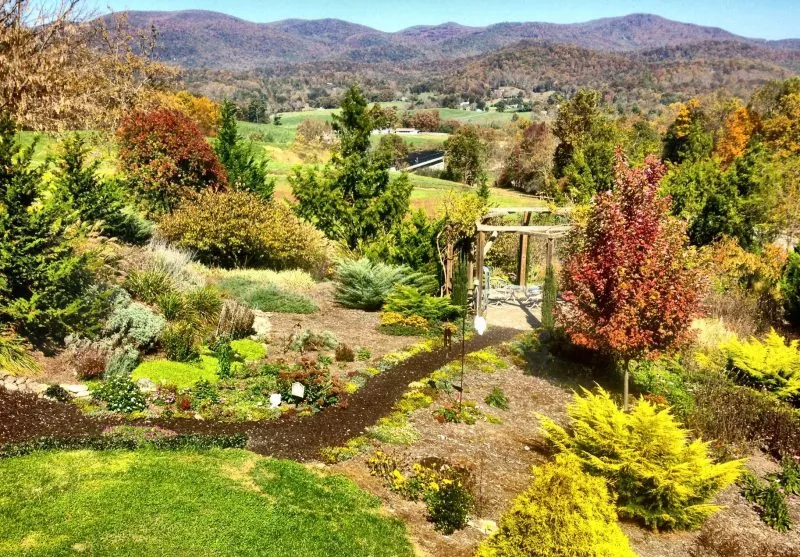

Ask anyone who gardens in Asheville what their biggest frustration is and deer come up fast, usually right after clay soil. We work on properties from in-town West Asheville lots to steeper places up toward Weaverville, and the deer pressure varies enormously street to street. Some clients lose a hosta bed overnight. Others have watched the same herd walk the same route through the yard every evening for a decade.
Here is how we think about deer when we design a landscape in the Western North Carolina mountains: what they actually eat, what they mostly leave alone, and the design decisions that matter more than any plant list.
Deer-resistant does not mean deer-proof
Start here, because most plant lists bury it. NC Cooperative Extension puts it plainly: no plant is guaranteed, and a hungry deer will eat almost anything to stay alive. In a drought or a hard winter, plants that normally go untouched get browsed. In spring, as tender new growth emerges, deer will sample nearly everything, and they particularly go after flower buds.
Two other things in that same guidance are worth knowing, because they are within your control. Deer prefer vegetation that is soft to the touch and high in water content, and plants that are heavily fertilized and heavily watered are exactly that. A pushed, lush landscape is a more appealing landscape to a deer than a lean one. It is one more argument for the approach in our guide to low-maintenance mountain landscaping: plants chosen to suit the site, not propped up to survive it.
What makes a plant unappealing to a deer
Rather than memorize a list, learn the traits. Extension groups deer-resistant plants by what they have in common: thorny or prickly leaves and stems, strong scents and pungent tastes, foliage that is poisonous or full of thick latex-like sap, and hairy or fuzzy leaves. Once you can feel and smell for those characteristics in a nursery, you can make a reasonable judgment about a plant nobody has written a list about.
The plants deer go for first around here
Some of the most-planted things in Asheville yards are also the first things eaten. Hostas and daylilies top the list, and in a bad year they get taken to the ground. Azaleas are the shrub equivalent, which stings in a region that plants them everywhere. Tulips and crocus are deer candy and are rarely worth the bulb money in a browsed yard. Arborvitae, which gets planted constantly as a privacy screen, is on the same list, and a browsed arborvitae never fills back in from the bottom. Roses, blueberries, and English ivy round it out.
Rhododendron sits in a more interesting spot. Ours do get browsed, sometimes enough to be genuinely frustrating, but generally without the appetite deer reserve for azalea. On mountain properties where native rhododendron is already part of the woodland edge, that is usually something to design around rather than a reason to pull anything out.
What they mostly leave alone
Ferns and ornamental grasses
These are the two most reliable categories we plant. Deer rarely browse fern foliage, and ornamental grasses are avoided as a group. In shade, Christmas fern, a native evergreen that slowly spreads and naturalizes, does a lot of quiet work along a woodland edge. In sun, little bluestem, switchgrass, and muhly grass give you movement through the season and structure through the winter. Grasses are also long lived and genuinely low maintenance, which is a rarer combination than it sounds.
Evergreen structure
Junipers and Eastern redcedar, American holly and inkberry holly, boxwood, and pieris all sit on the seldom-damaged side. American holly earns its place honestly, with thick, spiny, leathery leaves that nothing wants to chew. This matters most when the real problem is screening rather than decoration. After hurricane damage took out large trees at Robyn and Bruce's Weaverville property, the privacy planting had to be evergreen and it had to survive without being nibbled down to sticks.
Perennials and herbs
Coneflower, catmint, Russian sage, lamb's ear, coralbells, false indigo, butterflyweed, bee balm, and Lenten rose are all in the seldom-damaged column. So is most of the perennial herb shelf: rosemary, thyme, sage, oregano, lavender. If you have a sunny bed that keeps getting hit, a scented, gray-leaved, drought-tolerant planting is usually the answer.
Bulbs
Daffodils are the one spring bulb that reliably comes back in a deer yard, along with summer snowflake and Spanish bluebells. If you want spring color and you have deer, plant daffodils and skip the tulips.
Native does not automatically mean deer-resistant
This one catches people out, and it matters here because native planting is our foundation. Deer are native too. They browse plenty of native plants and ignore others, so "native" and "deer-resistant" are two separate questions you have to ask about the same plant. Mountain mint, Christmas fern, little bluestem, and American holly happen to be both. Native azalea is emphatically not.
It also depends on what you are trying to do. Hillary and David's Asheville garden is a food forest, designed deliberately to feed wildlife through every season. That is close to the opposite brief from a yard where you want the browsing to stop, and both are legitimate goals. What matters is knowing which one you are building before anything goes in the ground.
The pet-safe overlap most deer lists miss
Here is a conflict worth catching early. A number of classic deer-resistant plants appear on the ASPCA's toxic-to-dogs list, precisely because toxicity is one of the things that deters a deer. Boxwood, lavender, yarrow, Lenten rose, and lantana are all listed as toxic to dogs. So are daffodil bulbs, which we flagged in our notes on dog-safe yard design.
The overlap cuts the other way too. Azaleas and rhododendrons are both a deer favorite and toxic to pets, so leaving them out of a planting plan solves two problems at once, and plants we already lean on, like ornamental grasses and coneflower, sit comfortably on the safe side of both lists. If you have a dog that chews, say so at the design stage. It changes the plant list before anything is ordered rather than after.
Design around deer, not just plant around them
Plant choice is one lever. Layout is the other, and on most properties it does more of the work.
The approach Extension recommends is zoning the landscape. Put the plants you cannot live without, the ones deer love, closest to the house where they are easiest to protect and where ordinary human traffic already discourages browsing. Use the most resistant plants at the far edges of the property. Let the middle be things you can accept losing occasionally. It is the same instinct as designing around a dog's patrol route, and it means you keep a few favorites instead of surrendering the entire palette.
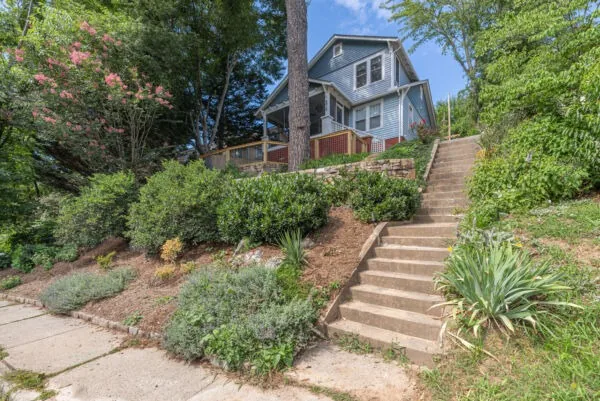
Grade changes help as well. Deer are not stopped by a low wall, but a terraced bed sitting above a retaining wall is harder to casually step into than a flat border at ground level, and the stone edge gives the planting a defined boundary rather than an open buffet.
If you are considering fencing, know what actually works before you spend the money. Deer can clear roughly eight feet, so an exclusion fence needs to be about that tall and well built enough that they cannot push through it. The alternative is a double fence, two five-foot runs set four to five feet apart, which works because a deer will not jump into a gap it cannot judge. Both are real structures, and fence height and placement are regulated differently inside Asheville city limits than in unincorporated Buncombe County, so check with the permit office covering your address before you build anything.
Repellents work, with an asterisk. They have to be reapplied, especially after mountain rain, and they work best when you rotate products so the deer do not habituate to one. Treat them as a tool for getting new plants through their first season, not as a permanent landscape strategy.
The other kind of deer damage, and it is a fall problem
Browsing is not the only way deer hurt a landscape. In late summer and early fall, bucks rub their antlers against tree trunks to strip off the velvet, and they choose exactly the trees you just paid for: young, slender, flexible trunks that fit neatly between the antler points. The rubbing strips bark heading into winter, it can kill a young tree outright, and it cannot be repaired afterward.
The fix is cheap, and it only works before the fact. Any newly planted tree of rubbing size gets a protective cylinder around the trunk, tall enough to cover the rubbing zone and open enough that air still moves around the bark and the trunk can expand as it grows. It comes off once the tree is big enough to stop being interesting. When we plant trees in the fall, that protection is part of the job.
When to plant
Asheville sits in USDA zone 7, and fall is the strongest planting window we get here. The soil is still warm, the air has cooled, and rainfall is usually more dependable, so roots establish through the dormant season instead of fighting August heat. In a deer yard that timing carries a second benefit: a plant that goes in during autumn has months to root in before the spring flush, which is exactly when deer are least discriminating and most likely to test something unfamiliar.
New plantings are more vulnerable than established ones no matter what any list says about the species. Plan on protecting them through the first season, then let the plant palette carry the load after that. It is the same principle behind every planting plan we draw, and it pairs with the water and grading questions covered in our guide to yard drainage on Asheville's slopes, because a plant sitting in standing water is a stressed plant long before a deer finds it.
We have been designing and building landscapes across Asheville, Buncombe County, and the Western North Carolina mountains since 1997, and planting design is one of our core services. Have a look at the projects we have built, where you will also find answers to the questions we get asked most often, or schedule a consultation and we will walk your property with you and tell you honestly what the deer are likely to do to it.
Frequently asked questions
Are there any truly deer-proof plants in Western North Carolina?
No. NC Cooperative Extension is direct about it: no plant is guaranteed, because a hungry deer will eat almost anything to stay alive, and in a drought or a hard winter plants that are normally left alone get browsed. What you can do is stack the odds, by building the planting mostly from the seldom-damaged categories, meaning ferns, ornamental grasses, scented herbs, and tough evergreens like holly and juniper, and accepting occasional damage on everything else.
Do deer eat rhododendron and azalea in Asheville?
Azaleas are one of their favorites and are usually the first shrub hit in a browsed yard. Rhododendron gets browsed too, sometimes enough to be genuinely frustrating, but generally without the same appetite. On mountain properties where native rhododendron is already part of the woodland edge, we design around it rather than replacing it.
Are deer-resistant plants safe for dogs?
Not automatically, and the two lists conflict more often than people expect, because toxicity is one of the things that makes a plant unappealing to a deer in the first place. Boxwood, lavender, yarrow, Lenten rose, and lantana all appear on the ASPCA's toxic-to-dogs list, as do daffodil bulbs. Ornamental grasses and coneflower are examples that sit safely on both lists. If you have a dog that chews, tell your designer before the plant list is written.
How tall does a deer fence need to be?
Deer can clear roughly eight feet, so a single exclusion fence needs to be about that tall and built solidly enough that they cannot push through it. The alternative is a double fence, two five-foot runs set four to five feet apart, which works because a deer will not jump into a gap it cannot judge. Fence height and placement are regulated differently inside Asheville city limits than in unincorporated Buncombe County, so check with the permit office covering your address first.
Why are deer damaging my young trees in the fall?
That is antler rubbing rather than feeding. In late summer and early fall bucks rub their antlers on trunks to strip off the velvet, and they target young, slender, flexible trees, which usually means recently planted ones. It strips bark heading into winter, it can kill the tree, and it cannot be repaired afterward. Protect new trunks with a cylinder that covers the rubbing zone and still lets air circulate around the bark.
Thinking about a project like this?
We've been designing and building landscapes across Asheville and Western North Carolina since 1997. Tell us about your property and we'll walk it with you.
Schedule a consultation or call 828-624-5136